Hanifaru Bay Maldives: Manta Rays & Whale Sharks
A practical guide to Hanifaru Bay — the UNESCO-protected lagoon in Baa Atoll famous for reef manta rays, whale sharks, and “cyclone feeding.” Season, rules, and how to visit responsibly.
Located deep within the Baa Atoll UNESCO Biosphere Reserve, Hanifaru Bay is a bucket-list destination for ocean lovers worldwide. This guide covers the protected marine area, the wildlife that gathers here, conservation rules, and how to experience it responsibly during a stay in the Maldives.
Last updated: September 2026
What is Hanifaru Bay?
A UNESCO-protected marine marvel
Hanifaru Bay is not an island, but a unique, funnel-shaped lagoon located in the Baa Atoll. While it measures no more than a football field in size, its unique geography creates one of the most dynamic underwater environments on the planet.
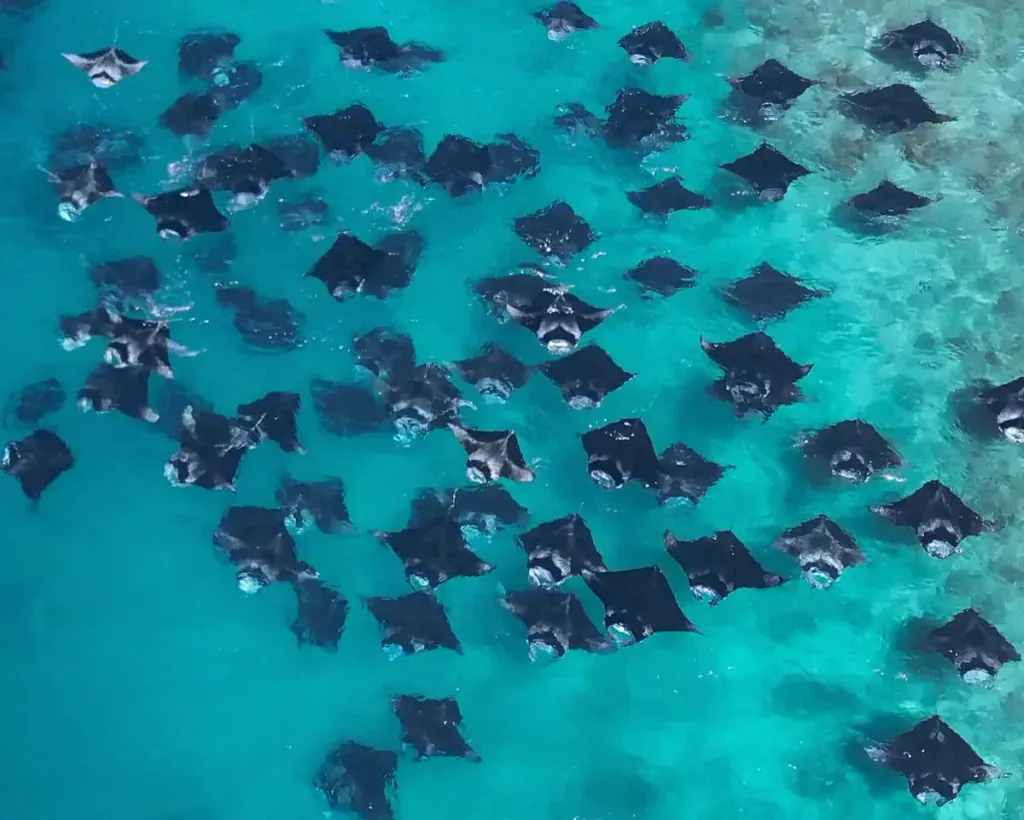
During specific times of the year, shifting monsoonal currents sweep massive amounts of plankton into the bay. Because it acts as a cul-de-sac, the plankton becomes trapped, creating a dense, nutrient-rich soup. This phenomenon attracts some of the ocean's most magnificent filter feeders: reef manta rays and whale sharks in unprecedented, concentrated numbers.
Location
Baa Atoll, Maldives, at the heart of the Maldives UNESCO Biosphere Reserve.
Status
Core Marine Protected Area (MPA), managed for conservation and responsible visitor access.
Global significance
The world's largest known manta ray feeding station and a bucket-list Maldives marine life experience.
The “Cyclone Feeding” Phenomenon
Nature's underwater ballet
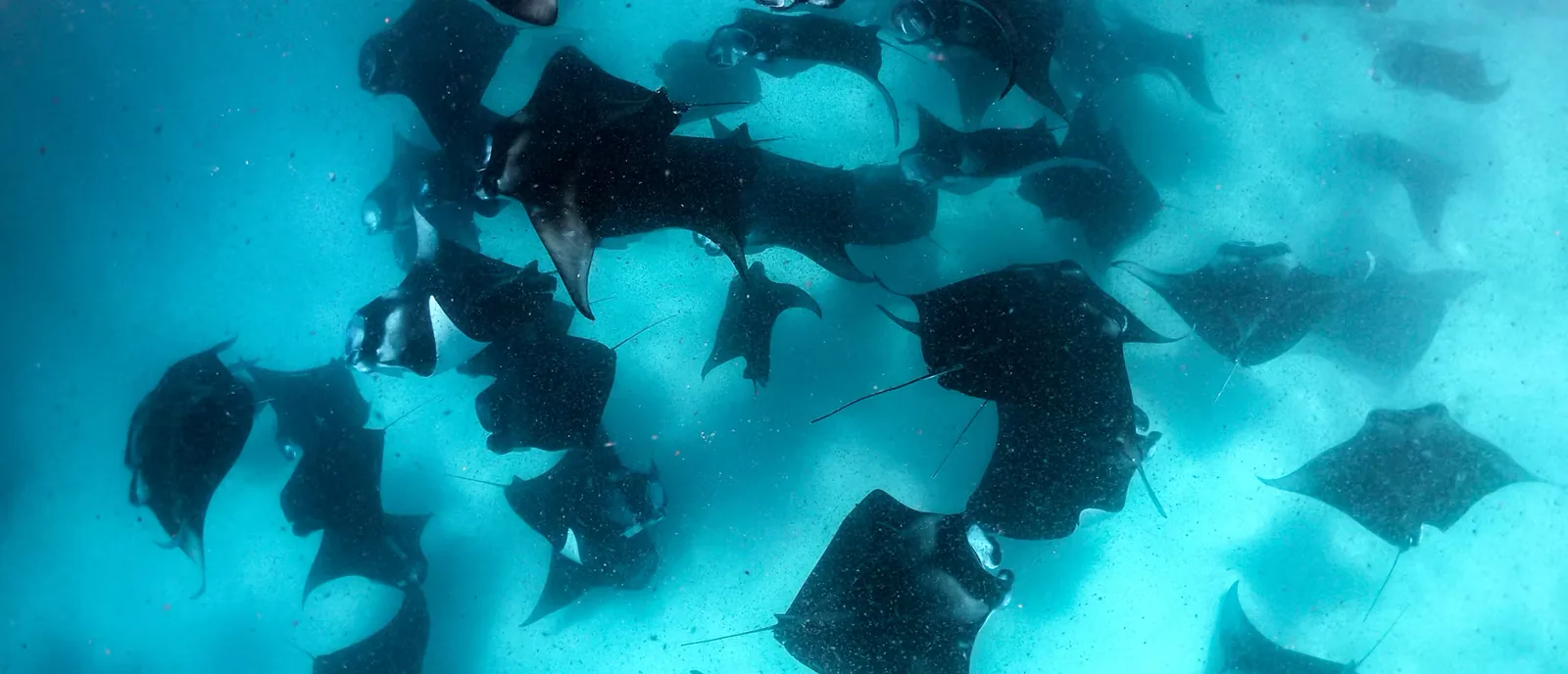
Hanifaru Bay is globally renowned for a specific behavior known as “cyclone feeding.” When plankton levels reach their absolute peak, the usual graceful feeding of a few solitary manta rays transforms into a massive frenzy.
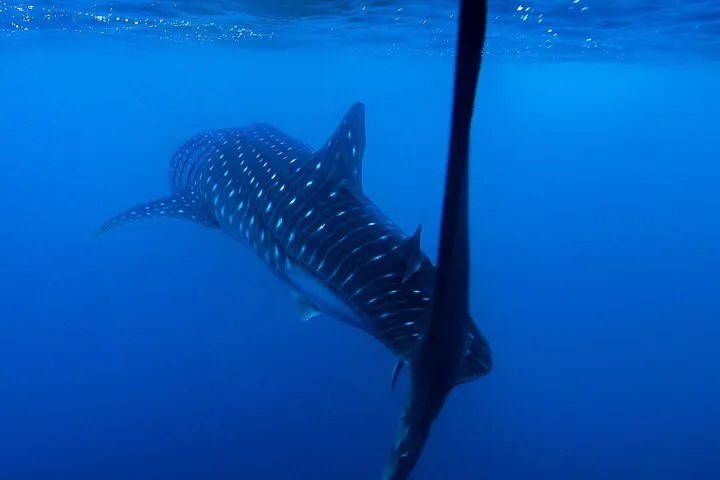
Up to 200 manta rays can be seen barrel-rolling, swooping, and gliding in a tightly choreographed, chaotic yet beautiful dance. It is not uncommon to see gentle whale sharks slowly cruising through the middle of the manta cyclone, sharing the massive plankton buffet.
Timing is Everything
The best time to visit Hanifaru Bay
Because the wildlife gatherings are entirely dependent on tides, currents, and plankton, timing your visit to the Baa Atoll is crucial.
The manta season
The highest concentration of marine life occurs during the Southwest Monsoon, which runs from May to November.
The lunar advantage
The absolute best days to witness a massive feeding frenzy are dictated by the moon. Plankton gets pushed into the bay most forcefully during the extremely high tides that occur around the Full Moon and New Moon.
Tip
Planning your trip dates around these lunar phases maximizes your chances of seeing cyclone feeding. See our Maldives weather guide on the Kinbi site for more seasonal insights.
Rules, Regulations, and Conservation
Protecting the sanctuary
Hanifaru Bay is a highly sensitive and strictly regulated environment. The Maldivian Environmental Protection Agency (EPA) enforces strict rules to ensure that tourism does not disrupt the marine life. Anyone planning an excursion here must be aware of the following regulations:
- No scuba diving: To prevent bubbles from scaring the wildlife and to keep the water column clear, scuba diving is strictly prohibited. Hanifaru Bay is a snorkeling-only zone.
- Strict time limits: Boats and snorkelers are given designated, limited time slots (usually 45 minutes) to spend in the water to prevent overcrowding.
- Keep your distance: Snorkelers must maintain a minimum distance of 3 meters from manta rays and 4 meters from whale sharks.
- No touching or chasing: Visitors must remain calm in the water. Swimming after, touching, or obstructing the path of the animals is illegal.
- No flash photography: Flash and strobe lighting are banned to protect the sensitive eyes of the manta rays and whale sharks.
- Entry tokens: Every visitor must purchase an official Hanifaru Bay token, the proceeds of which go toward the Baa Atoll Conservation Fund.
For more on how we think about the environment at Kinbi, read sustainability at Kinbi Private Villa.
How to Experience the Bay
Planning your excursion
Because Hanifaru Bay is strictly regulated, you cannot simply take a boat and jump in. Visitors must book a dedicated excursion through a licensed operator, guesthouse, or villa host in the Baa Atoll.
Most accommodations in the area offer Hanifaru Bay snorkeling trips during manta season. They handle logistics, entry tokens, and transport to the edge of the protected zone. Snorkeling only — scuba is not allowed in the bay.
Hanifaru Bay from Goidhoo & Kinbi Private Villa
From Goidhoo Island, boat time to Hanifaru Bay is typically 30–45 minutes. Peak aggregations are often June–November; licensed operators and conservation tokens are required.
Guests at Kinbi Private Villa — an entire private pool villa on Goidhoo, not a resort room — can ask us to arrange responsible, licensed trips when conditions allow. Tell us your dates when you enquire, or read our Goidhoo Island guide.
Questions about Hanifaru Bay?
Ask about season timing, rules, or arranging a licensed trip from Goidhoo. We can also help with transfers and an entire-villa stay at Kinbi during manta season.
Get in Touch
Phone
+960 7575 960Hanifaru Bay quick facts
- Peak season: May to November (Southwest Monsoon)
- Best tides: around New & Full Moon
- Snorkeling only; no scuba in the bay
- Licensed operators & entry tokens required
Hanifaru Bay inquiry
Photography on this page courtesy of Liquid Salt Divers, PADI 5 Star Dive Centre, Dharavandhoo, Baa Atoll.